

Cognitive Behavioural Therapy for Insomnia (CBT-I) is an effective treatment for this serious sleep disorder. Whilst the name is similar to the more well-known CBT, it is significantly different and offers specialist techniques to help with insomnia.
Learn more about CBT-I, what’s involved, accessing this therapy and the great results Dr Lindsay Browning has witnessed.
CBT vs CBT-I
It is very understandable that CBT and CBT-I get confused. Cognitive Behavioural Therapy (CBT) deals with mental health issues, such as depression and anxiety, whilst CBT-I is specific for insomnia.
Unfortunately, people with insomnia often don’t access the help they need using this therapy because they may have experienced CBT before and feel instantly turned off trying CBT-I because they think they have already tried the therapy.
However, CBT-I is very different and, most importantly, a very effective treatment for insomnia because it has been developed for this specific issue. It is listed as a treatment offered from GPs on the NHS website.
A 2015 systematic review found CBT-I is effective, in around 70-80% people find improvement in the time taken to fall asleep, increasing total sleep time and reducing awakenings. In addition, a 2018 meta-analysis, in Sleep Medicine Reviews, concluded: “CBT-I, either its components or the full package, is effective in the treatment of insomnia”
CBT-I is vastly and wholly different than CBT.
It is also important to clarify that CBT-I is not the same as simple sleep hygiene. Sleep hygiene includes good habits and practices to help you fall asleep and sleep well, but will not cure insomnia. CBT-I is a multicomponent treatment for insomnia, involving cognitive and behavioural interventions, plus sleep education and relaxation strategies.
Understanding insomnia
Insomnia is a chronic condition. It is very different from having infrequent bad nights of sleep or sometimes struggling to fall asleep.
To be classed as insomnia, a person must take at least 30 minutes to fall asleep, wake for at least 30 minutes during the night, or wake at least 30 minutes earlier than their ideal waking time. In addition, the person must report feeling tired or have some impairment during the daytime following the sleeping problem.
It is classed as ‘chronic insomnia’ when this happens at least three nights’ a week and has been going on for at least three months.
When a person has insomnia the traditional ‘good sleep hygiene’ suggestions can actually sabotage your attempts to get a good night’s sleep. This is why CBT-I and sleep hygiene is also very different.
For example, sleep hygiene techniques (such as no screen time or avoiding caffeine) can actually make things worse, especially if a person with insomnia, so desperate to get to sleep, takes the advice to the extreme. This could include avoiding any screen time for say 3 hours before bedtime, making evenings long and tedious, and interfering with a person’s social time. This then leads to anxiety and an unhealthy focus on ‘the need to prepare for sleep’, which can then be detrimental to a person falling asleep once they are in bed. Ironically, watching a bit of TV or going out to the cinema with friends could have actually been the better option to help the person sleep.
When to consider CBT-I
It is useful to compare insomnia to any other illness.
Like healthy eating or doing regular exercise for your general health, it is important to have a good baseline when it comes to helping you sleep well. You are less likely to get ‘ill’, making sleep hygiene important. However, once you are ‘ill’, i.e. you catch pneumonia, then no amount of healthy eating or exercise will truly help. It’s time for antibiotics!
With insomnia, it’s time for professional help and CBT-I. As mentioned above, CBT-I is the recommended first-line treatment for both short- and long-term insomnia in adults of all ages, by NICE, above sleeping medication.
You should certainly speak to your GP if you are frequently struggling with your sleep and feeling consistently tired to rule out other potential causes, such as thyroid issues or low iron levels.
What is involved with CBT-I
CBT-I involves a variety of activities and interventions. The Sleep Foundation summarises these as:
- “Cognitive interventions: Cognitive restructuring attempts to change inaccurate or unhelpful thoughts about sleep.
- Behavioral interventions: Relaxation training, stimulus control, and sleep restriction promote relaxation and help to establish healthy sleep habits.
- Psychoeducational interventions: Providing information about the connection between thoughts, feelings, behaviors, and sleep is central to CBT-I.”
Read more here: https://www.sleepfoundation.org/insomnia/treatment/cognitive-behavioral-therapy-insomnia
CBT-I treatment plan example
At Trouble Sleeping, Dr Lindsay Browning offers a 5 session treatment plan for CBT-I.
In advance of your first session, you will be sent a questionnaire all about your sleep and also asked to keep a sleep diary throughout the process. Keeping this ongoing sleep diary enables Dr Browning to keep track of how your sleep is improving over time, and to make recommendations based on your specific sleep.
Also, an ‘intake’ session will include an assessment to evaluate potential other sleep disorders, such as sleep apnoea, that could be causing disruption. This is because CBT-I won’t work effectively if you have other underlying medical conditions. These will need to be treated first. Dr Browning will taking a full history to understand you and your lifestyle and to understand what is causing the insomnia.
The second session is the first ‘intervention session’. If you have a bed fellow (i.e. your partner), we recommend they come along with you as Dr Browning will recommend significant changes, which may have an impact on their sleep too. Also, some of the treatment recommendations may be be difficult to implement. Therefore, it is important that the person sharing your bed understands these recommendations, so that they can also offer you support.
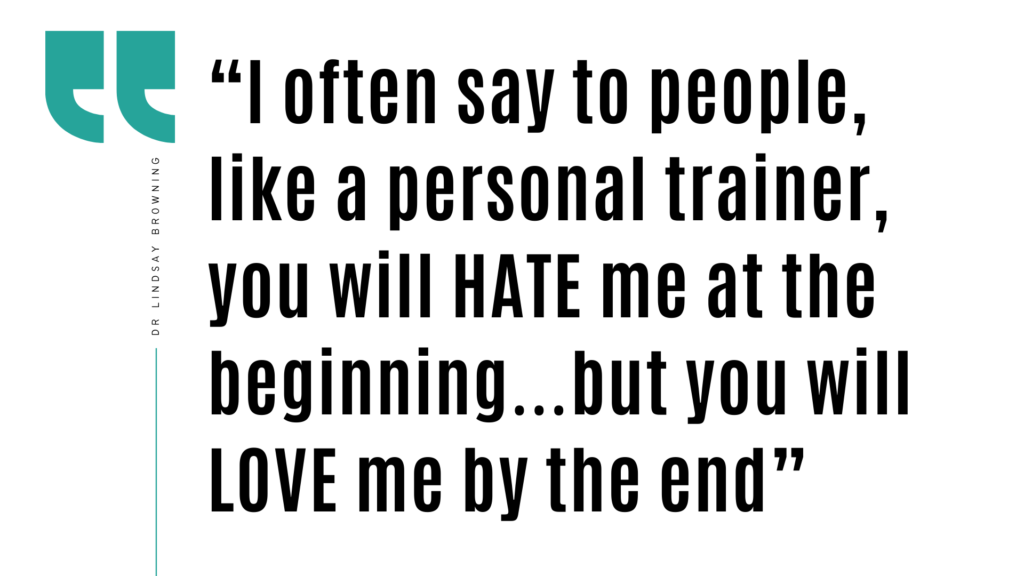
The recommended interventions will not be easy. Change can be difficult and hard, but it is important to understand that something has to change to break the cycle of insomnia and trouble sleeping. The process will help you re-learn how to sleep well and get you sleeping better.
In the following three sessions, together, we will assess your sleep diary, the recommended changes or interventions and truly understand what is working for you. Dr Browning will continue to trial different techniques and make different recommendations, as well as helping you with negative thoughts or “catastrophising” related to your insomnia, helping you to rewrite those beliefs, practice relaxation strategies and manage panic, which can be associated with the fear of not falling asleep.
After each session, you will be sent a full report and guide to help you implement recommendations and techniques – giving you a toolkit that you can refer to in the future.
As well as the ‘formal’ sessions (which can take place in person or via video call online), the 5 sessions include access to Dr Browning via email or phone to support you and answer any questions or concerns throughout the process.
How effective is CBT-I
When working with an expert, the therapy overall, as well as each session, is tailored and specific to you. With CBT-I, sleep can get worse before it gets better. However, from Dr Browning’s extensive experience, it is very rare for a person to need more than 5 sessions. It is a really complete therapy and designed to ‘break the cycle’ and to be a fix.
Everyone will have an occasional bad night’s sleep. However, if you do suffer with sleep problems in the future, especially due to a health condition or an upsetting or stressful event, for example, you should have learned the tools to know how to fix your poor sleep. Also, of course, your therapist will be there to support you at any stage in the future, if you need reassurance or advice.
The effectiveness of CBT-I means you should also have the skills to manage short-term sleeping problems and never return to long-term insomnia.
Medical issues and CBT-I
CBT-I is completely safe with many co-morbid physical and mental health conditions. It can be adapted to address the needs of patients with different health issues and a recent 2022 study found “ CBT-I is significantly more effective than control conditions both for the reduction of insomnia and the improvement of mental health.”
It is recommended that you speak to your GP about your insomnia before you start CBT-I.
As part of the CBT-I treatment, you may find that your sleep gets initially and temporarily worse, as you start to re-shape your relationship with sleep. As a result, you may feel more tired at this initial stage, and it is important that you mustn’t do anything to put yourself or anyone else at risk if you are feeling very sleepy – such as driving a car if feeling fatigued. If you are really struggling to cope with daily life, the benefit of the treatment is that the recommendations can be adjusted and tailored to help you.
Further options for support with sleep problems
The 5 session plan is incredibly effective, however, for short-lived sleep problems you can also access a one session service. It is based on CBT-I principles and offers lots of resources. It is complementary to the free materials offered by the NHS.
Dr Browning’s book ‘Navigating Sleeplessness’ is also an informative, first point of call. It helps you to understand the principles of good sleep hygiene and can certainly help before any short-term sleep problems become a chronic problem.
Accessing CBT-I
If think you have insomnia or feel your sleep problem is becoming serious or long-term, do get in touch to book a consultation call.
In one discussion, Dr Browning can start to help to understand your insomnia, evaluate any other medical conditions or contributing factors, and make the best recommendation of treatment for you.