
Did you know that alcohol affects sleep? Whilst, alcohol is a sedative and can make it easier to fall asleep, the quality of your sleep will be worse and it is likely the alcohol will disrupt you, during the night. This means that the sleep you do get may not be as restorative as alcohol-free sleep.
In this blog post, Dr Lindsay Browning answers some frequently asked questions to help you understand more about the effects of alcohol on sleep.
FAQs about how alcohol affects your sleep – answered
How does alcohol affect our sleep?
Alcohol affects our sleep. When we drink too much, it helps us to fall asleep quickly but the second half of the night’s sleep is disrupted due to frequent waking up.
Alcohol is also a diuretic meaning that you may wake up more frequently during the night to need the toilet, plus, it can make you more likely to sweat, increasing the dehydration and making staying asleep comfortably more difficult. Also, as alcohol is a muscle relaxant it can make snoring worse which can disrupt not only your sleep, but that of your partner too.
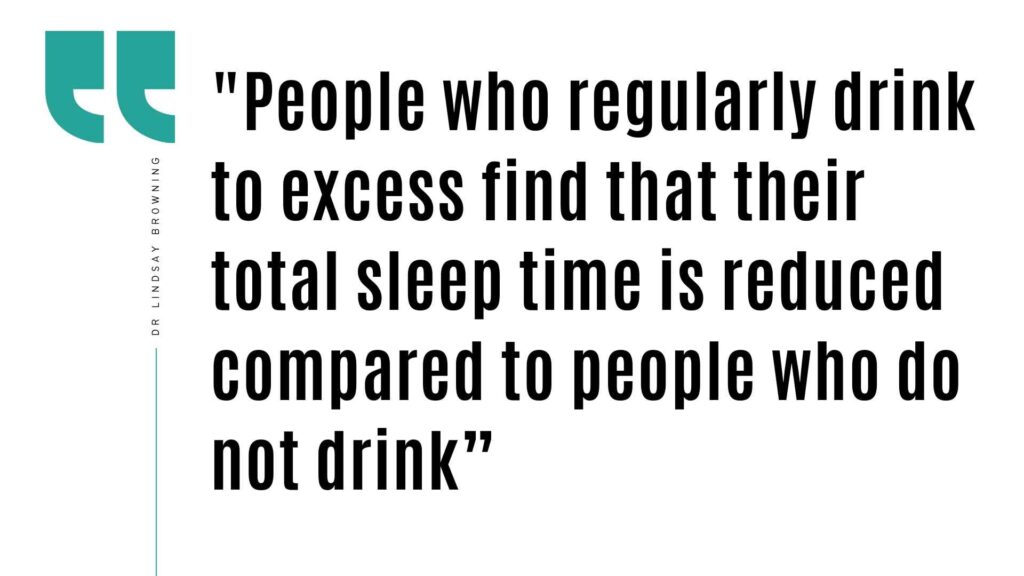
People who regularly drink to excess (such as alcoholics) find that their total sleep time is reduced compared to people who do not drink. In addition, although heavy drinkers may have deeper sleep at the start of the night, they will take longer to go into REM sleep, and have less REM sleep overall compared to a normal sleeper.
What happens during our sleep when we have drunk alcohol?
Alcohol is a sedative and can help with falling asleep. However, as the alcohol is metabolised (processed by our body), it promotes wakefulness in the latter half of the night – meaning that you wake frequently in the early hours. Also, alcohol affects the normal progression of the sleep stages we go through each night, meaning that the sleep we do get is not as restorative. Lastly, alcohol is a mild respiratory depressant, meaning that it makes breathing slightly more difficult. This is really important for people with sleep apnoea because their sleep apnoea will be worse when they have drunk alcohol making them wake up more frequently as they repeatedly stop breathing with the apnoeas.
Learn more about how alcohol affect sleep stage in my contribution to the
Women’s Health Article: Alcohol and Sleep: Why does booze disrupt your shut eye?
How long does alcohol affect sleep for?
The after-effects of heavy alcohol consumption (i.e. a hangover) not only affect your sleep but also your daytime cognitive and psychomotor performance the next day. Also, alcohol can affect your sleep during the night even after daytime drinking. Alcohol at lower doses has less of a disruptive affect to sleep – you are less likely to wake up in the early hours and your sleep stages will be closer to normal the less you have drunk.
Is it wrong to use alcohol to help you fall asleep?
Many people with problems falling asleep use alcohol to help them fall asleep faster. In low doses and in the short term this isn’t the end of the world, however within a few days of using alcohol top help you sleep, your body starts to become tolerant to the alcohol and it won’t have the same effect at helping you fall asleep as easily. This can actually make falling asleep much harder without alcohol than it was originally – in essence giving you insomnia. Since 30% of people with insomnia report using alcohol to help them sleep, treatment for insomnia with talking therapy (CBT-I) I believe is preferable to help them fall asleep without the need of drugs or alcohol.
How long does it take to sleep off alcohol?
This depends on how much you have drunk. Generally speaking, the more you have drunk the longer it will take your body to metabolise it and the more you have drunk be more disrupted your sleep will be.
What happens to my sleep if I stop drinking alcohol completely?
If someone who has been drinking heavily stops drinking and abstains from alcohol, for the first 1-2 weeks of sobriety their sleep will become less deep and they will have frequent REM sleep with shorter sleep cycles compared to a normal healthy sleeper. It is as if their body is making up for the lost REM sleep they missed when they had alcohol affected sleep. For some people, these abnormal sleep patterns can last for up to 3 years of sobriety (including having shorter total sleep but with increased percentage of time spent in REM sleep).
For those in do not regularly drink heavily or excessively, but decide to stop (for example for Dry January), once you get used to falling asleep without needing the sedative effect of alcohol, you should get better quality sleep because it’s not being disrupted due to the alcohol. In fact, a 2018 study called Temporary abstinence during Dry January found that 70% of people who took part in Dry January reported better sleep when they were abstaining from alcohol.
Also, when someone stops drinking alcohol, some immediate effects are that snoring and sleep apnoea symptoms often improve, plus you will have less disturbed sleep through needing the toilet during the night.
Insomnia, alcohol and sleep – get support
If you are struggling with your sleep and find that you are turning to alcohol more and more to help you fall off to sleep, do consider reaching out for support.
As mentioned above, , treatment for insomnia with talking therapy (CBT-I) would be preferable, leading to falling asleep without the need for alcohol.
Reach out for support with your sleep this year by booking an initial consultation: