
Struggling to get to sleep is the worst! However, there are a range of activities we can do to help us sleep and to fall asleep more easily, as well as some things to avoid.
In this blog post, Dr Lindsay Browning explains the effect of different things that you may do shortly before bedtime, and what to try if you are struggling with getting to sleep too.
What do we need to help us sleep?
When we go to sleep, we need to be calm and physically ready for sleep.
Some things we do before bed can actually make it harder to fall asleep, such as drinking caffeine which is a stimulant. Simply feeling stressed can also affect the hypothalamic-pituitary-adrenal (HPA) axis, which increases cortisol and quickens our breathing, keeping us awake. A busy mind can be hard to shut off.
Therefore, it is a good idea to look at what you do with your time just before bed to make sure you’re not making it harder to fall asleep.
Anything you can do to help your body and mind be in a calm and relaxed state will make falling asleep easier.
Things we do before sleep and their effect
Chatting
There are no studies that suggest you should not “chat” before bed. However, if you have a difficult or emotional conversation close to bedtime, this may result in you being physiologically aroused and make it harder to fall asleep.
It’s best to avoid stressful or particularly distressing conversations too close to bedtime, as it is harder to sleep when we are stressed, worried or anxious.
Plus, it can be hard to switch off a busy mind if you have recently been discussing and thinking about an important issue.
If you do need to have a difficult conversation with a loved one, and shortly before bed is the only chance, then it is a good idea to not do it in the bedroom. This helps with keeping your bedroom as a peaceful sanctuary for sleep.
This is known as “stimulus control” – keeping your bed for only sleep, rest and sex, and not spending too much awake time when in bed.
Having sex
As we have mentioned ‘bedroom activity’ – let’s answer the question: “Does sex help us sleep?”.
When someone has an orgasm, oxytocin is released, which can reduce stress (release of cortisol) helping them to feel calmer. Although studies have not found clear evidence that orgasming is beneficial for objective measures of sleep (such as time taken to fall asleep or sleep quality), many people report (according to this study), sleeping better after having an orgasm. People surveyed generally agreed that sex with another person resulting in an orgasm improves sleep.
In a 2019 study in Sleep & Biological Rhythms, it was found masturbation (with orgasm) can also be beneficial. However, a more recent 2023 article published in the Journal of Sleep Research found no difference in sleep.
It may be that a combination of oxytocin release and also the physical comfort and intimacy of sex with a partner may help to offer the biggest perceived sleep improvements.
Exercising
Exercise is commonly recommended by professionals to improve sleep, and some studies suggest that it may improve deep sleep.
There is no universal “best time of day” to exercise, according to recent studies, as it may depend on factors such as fitness levels and your chronotype.
For people who are morning-type chronotypes (larks), they may want to avoid evening exercise, whereas late exercise for evening-types (owls) may not affect sleep quality.
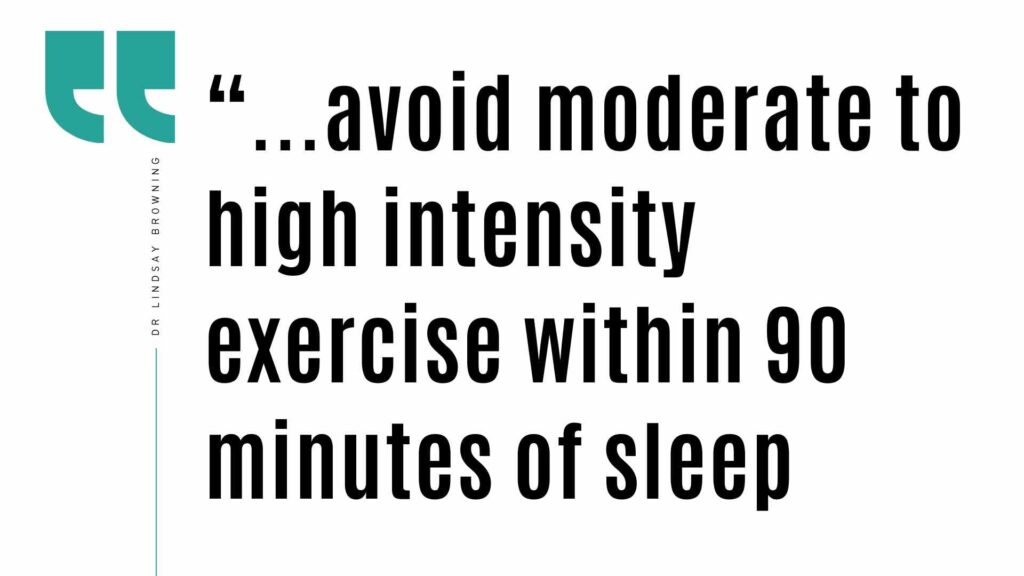
Overall, the general advice is to avoid moderate to high intensity exercise within 90 minutes of sleep, in order to ensure that core body temperature (which is elevated during exercise) can return to normal. before sleep.
Gentler forms of exercise, such as stretching and light yoga, will not result in an increase in core body temperature and can be done closer to bedtime.
Watching TV
A recent article, from 2024, suggest watching TV before bed may not be as detrimental to sleep as previously thought. This is because it may help to relax and occupy your mind, helping you to switch off before bed. However, we also sleep better when we keep our bedroom for sleep primarily, so that our brain associates our bed with sleeping rather than doing other things.
In an ideal world, therefore, it would be good to watch television in another room to your bedroom and make sure that you do not watch it after your ideal bedtime.
For some people they may want to stop screens 30-60 minutes before bed, so that they don’t get caught up watching the next (and the next!) episode in a gripping series and forget to go to bed on time!
Also, if you are watching something stressful close to bedtime, such as the news or a very scary film, this may make it harder for you to calm down and switch off to be able to go to sleep.
Using phones and other devices
Following on from above, it is worth saying that if you are watching TV on a tablet or a similar device, it may be worth enabling night mode to reduce the brightness and blue light frequency of the emitted light, which may affect melatonin production.
Interestingly, there is an August 2024 article in Sleep Medicine Reviews which reviewed previous literature about how screens and blue light affects sleep and concludes that the use of technology before bed is not as negative for sleep as once thought.
The review suggests that the bright lights from screens may not be the main cause of sleep disturbance, since the studies showed a maximum delay in falling asleep after watching bright screens of just 9.9 minutes (see Table 1 in link below).
The end of the article has a really good summary of their findings and recommendations for future sleep advice:
Reading… or listening to audio books
Reading before bed can be a great way of switching off and getting your brain and body in a relaxing calm state ready for sleep.
Reading is an excellent thing to do just before bed.
If you are struggling to fall asleep, you may want to read a book in another room, rather than in the bed itself, so that you are keeping your bed only for sleep and sex and not spending time awake in bed.
Listening to an audiobook in bed may result in you falling asleep whilst listening to it but then being woken up again by the noise or the narrator. Again, if you are struggling to sleep then you may want to listen to the audiobook on the sofa in the lounge and then get into bed when you start to feel sleepy.
Having a warm bath
A 2019 metanalysis of several studies concluded that taking a warm shower or bath 1–2 hours before bedtime can improve sleep, especially helping you fall asleep faster.
This most likely caused by enhancing the drop in core body temperature needed for sleep onset.
Eating
Food and sleep have a two-way relationship as discussed in this article, with each affecting the other.
Deciding when to stop eating before bed depends on the quantity and type of food consumed. Eating a large meal right before bed is not generally advisable as it can cause indigestion (acid reflux and heartburn), particularly if the meal is high fat, which can disrupt sleep.
Research suggests avoiding evening meals within approximately 3 hours of going to bed. However, having a light snack close to bedtime, especially those rich in protein, tryptophan or melatonin, may be beneficial to sleep. Such a snack may help to prevent low blood sugar, reduce hunger and promote a feeling of fullness until morning. Find out more about which foods may help you sleep deeper and longer here:
Drinking
It is well-known that drinking drinks that contain caffeine will not help you sleep. Caffeine stimulates the central nervous system helping the person feel less fatigued and sleepy. It has an approximate 6 hour half-life. This means it takes about 6 hours to metabolise half the caffeine, leaving half still in your system to keep you awake. Caffeine may also affect sleep quality by reducing deep sleep. People do metabolise caffeine differently and some people are more and less susceptible to its affect than others.
A recent meta-analysis looking at 24 studies on caffeine and sleep suggested that caffeine should be avoided within 8 to 9 hours of bed. Therefore, I suggest to my clients to avoid caffeine after 2pm (assuming an approximate 10-11 pm bedtime).
Similarly, although alcohol is a sedative, it actually leads to worse ‘quality’ sleep. Importantly, don’t rely on drinking alcohol to help you get to sleep. Alcohol can also disrupt your sleep later in the night.
However, it is important that you do not avoid drinking before bed. Small amounts of water to keep you hydrated is ok.
Hot drinks, like warm milk, can also be helpful for sleep as milk contains tryptophan – a precursor of melatonin. However, avoid traditional bedtime drinks, like hot chocolate, which may contain caffeine and also have a high sugar content.
Choosing the rights things to help you sleep
I hope this offers you a range of evidence-based information to help you choose what activities are best to help you sleep.
Choosing what to ‘do’ before bed is important for quality and quantity of sleep. In addition, so is having a good, consistent bedtime routine. Learn more about that here: