
On Sunday 29th March 2026, the clocks go forward by one hour. This means there is one less hour in bed …however, it does signify the start of British Summer Time (BST). An hour less at night already doesn’t sound like a good thing, does it?! But what does the loss of the hour mean for our sleep and how will the clocks going forward affect our circadian rhythm?
In this blog, Dr Lindsay Browning explores what the clocks changing means for your body, your sleep and how to cope with losing that precious hour.
How will the clocks going forward affect our sleep?
In 2026, the clocks go forward on Sunday 29th March. At 1am, the time immediately becomes 2am. Therefore, we “lose” an hour of sleep.
This time change has a number of impacts on our bodies and our sleep pattern.
Firstly, if we have not gone to bed extra early, and we get up at our usual wake-time, we will get one hour less sleep than usual.
Also, our circadian rhythm does not cope well with change. When we move our bedtime or wake-time by an hour, we can struggle to feel sleepy when it’s time for bed, and not feel awake enough to get up when its morning. We may feel sluggish in the morning because our circadian rhythm thinks we should still be sleeping, and we may feel too awake in the evening to go to bed on time.
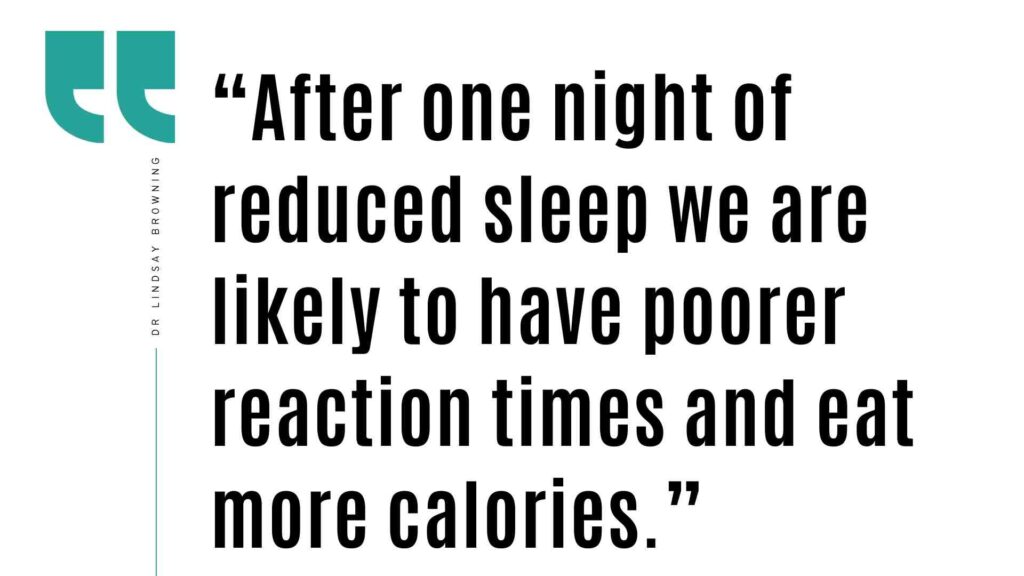
Although serious negative health consequences are associated with regularly not getting enough sleep, there are also immediate effects of not getting enough sleep for one night. After one night of reduced sleep we are likely to have poorer reaction times and eat more calories. Also, we may find it harder to fall asleep an hour earlier than usual, leading to sleep loss on the following nights until we have adapted to the clock change. This is because we have been used to going to bed an hour earlier (before the clock change), and our circadian rhythm will still be signalling that we don’t need to go to sleep for another hour, when we actually want to fall asleep.
However, it’s important not to worry too much about a small amount of missed sleep, as humans are designed to adapt and cope with sleep loss in the short term.
Are there are any advantages to the clocks going forward?
With the clocks going forwards the sun will set later in the day, which may mean increased natural light exposure for many people who have been coming home from work in the dark until now.
This increased likelihood that you can see natural light after work can boost mood and help boost our circadian rhythm. Also, when we get more light later in the day it means we are able to do more outdoor activities after work, which can increase our social happiness, as well as increased exercise levels if we can play sport or go for a run after work.
When the clocks change in March, it won’t be as light first thing in the morning. This means it is extra important that we try to get outside to see natural daylight as early in the day as possible to help move our circadian rhythm earlier in the day.
5 sleep tips for improving sleep when the clocks go forward
There are several things you can do to minimise the disruption caused by the clocks changing:
1. Plan in advance
Planning in advance of the clock change is one of the best things you can do. Start going to bed and waking up 15 minutes earlier than usual, and increase this by 15 minutes each day until the day that the clocks change. This will mean that you do not lose an hour’s sleep and will mean that you are already feeling sleepy earlier, and feeling alert earlier in the day when the clocks change.
2. Natural light exposure
As mentioned above, when the clocks go forward, you should make sure that you get some natural light exposure soon after waking. This will help you to feel more awake in the morning when your body will still be used to being asleep. It will also help to move your circadian rhythm a little earlier, to help you fall asleep an hour earlier than you have been used to. You should open your curtains as soon as you wake, and try to go for a walk before work, or even just eat your breakfast in the garden if possible.
3. Reduce bright light in the evenings
In the evening, reduce how much bright light you are exposed to. This means you may like to dim the lighting in your room, use candles or a lamp instead of the overhead light, and reduce the brightness of screens you are using in the evening. This will help your body to produce melatonin earlier to help you fall asleep at the earlier time.
If you have poor curtains, you may like to think about investing in thicker curtains or blackout blinds, so that the evening sunshine doesn’t interfere with your sleep, especially as the sun starts to set later and later.
4. Consider morning exercise
Morning exercise will help you to feel more alert in the mornings. Try to avoid evening exercise until you have adjusted to the clock change.
Exercise tends to help our body feel more alert, and can help to shift our circadian rhythm.
5. Ensure you are getting enough sleep
Finally, before the clocks change make sure that you have been getting enough sleep.
If you are already sleep deprived when the clocks change, you will be even more affected than if you are starting from a good baseline.
Coping with the clocks changing
With this advice, I hope that the clocks going forward each year won’t be too disruptive.
In anticipation, see also my blog about the clocks going back here: